

Dr. Andrew Schafer offers advice on current health and fitness trends for everyday people.
Thursday, September 5, 2013
Dr. Schafer's Backpack Safety Checklist:
One of the fundamental pieces of any back to school ensemble is, of course, the backpack. Although they’re practical, backpacks are a leading cause of back and shoulder pain for millions of children and adolescents. As students head back to school, the American Chiropractic Association (ACA) offers parents advice on preventing unnecessary backpack pain and injuries.
The ACA offers the following checklist to help parents select the best possible backpack for their children:
Is the backpack the correct size for your child? The backpack should never be wider or longer than your child’s torso, and the pack should not hang more than 4 inches below the waistline. A backpack that hangs too low increases the weight on the shoulders, causing your child to lean forward when walking.
Does the backpack have two wide, padded shoulder straps? Non-padded straps are not only uncomfortable, but also they can place unnecessary pressure on the neck and shoulder muscles.
Does your child use both straps? Lugging a heavy backpack by one strap can cause a disproportionate shift of weight to one side, leading to neck and muscle spasms, low-back pain, and poor posture.
Are the shoulder straps adjustable? The shoulder straps should be adjustable so the backpack can be fitted to your child’s body. The backpack should be evenly centered in the middle of your child's back.
Does the backpack have a padded back? A padded back not only provides increased comfort, but also protects your child from being poked by sharp edges on school supplies (pencils, rulers, notebooks, etc.) inside the pack.
Does the pack have several compartments? A backpack with individualized compartments helps position the contents most effectively. Make sure that pointy or bulky objects are packed away from the area that will rest on your child's back, and try to place the heaviest items closet to the body.
Dr. Schafer and the ACA both recommend that parents or guardians help children pack their backpacks properly, and they should make sure children never carry more than 10 percent of their body weight. For example, a child who weighs 100 pounds shouldn’t carry a backpack heavier than 10 pounds, and a 50-pound child shouldn’t carry more than 5 pounds.
In addition, parents should ask their children to report any pain or other problems resulting from carrying a backpack. If the pain is severe or persistent, seek care from a doctor of chiropractic or other health care professional.


Tuesday, August 6, 2013
What's goin on?
For anyone interested, we are working on 2 or 3 classes that we will be offering at EGR recreation department. 1. Yoga for low back pain 2. Yoga for barefoot runners and possibly 3. Stretch and strengthen with elastic bands. Stay tuned for more information.
Sunday, December 30, 2012
New Years Resolution Mistakes
Happy Holidays!
Now that we all have had our fill of eggnog and fruitcake, it’s time for:
New Years Resolutions!
Which brings me to my next blog post. As a former personal trainer, I cannot help but observe my fellow exercisers mistakes at the East Hills Health Club and Michigan Athletic Club. I do refrain from giving my advice when it is not asked, but there is no reason I shouldn’t post my observations for your benefit. I would also like to add that the personal trainers there are top notch, and I have never witnessed trainers employing any improper techniques at either gym.
This is by no means a scientific review of existing literature, but rather a personal observation from someone who has worked in 5 different gyms and health clubs, and has frequented dozens more as a customer. Here are some of the most common mistakes:
 1. Working out on the Stairmaster or Elliptical machine while leaning your weight on the side bars. I fully realize that leaning like this makes it easier, but it certainly does not make it better. It would be better to use your “core” muscles by supporting your own body. If you can’t do this, maybe you should switch to a seated stationary bike or recumbent bike.
2. Performing abdominal crunches by the hundreds, but not doing any low back (erector spinae) exercises. Consider anything around your mid section as core. This includes rectus abdominus, transverse abdominus, obliques, quadratus lumborum, and erector spinae,. Personally, I feel that gluteal and hip musculature should also be considered as core. I also think that if you need to do more than 40 reps of any exercise to get a good workout, you need to switch to a more difficult exercise.
1. Working out on the Stairmaster or Elliptical machine while leaning your weight on the side bars. I fully realize that leaning like this makes it easier, but it certainly does not make it better. It would be better to use your “core” muscles by supporting your own body. If you can’t do this, maybe you should switch to a seated stationary bike or recumbent bike.
2. Performing abdominal crunches by the hundreds, but not doing any low back (erector spinae) exercises. Consider anything around your mid section as core. This includes rectus abdominus, transverse abdominus, obliques, quadratus lumborum, and erector spinae,. Personally, I feel that gluteal and hip musculature should also be considered as core. I also think that if you need to do more than 40 reps of any exercise to get a good workout, you need to switch to a more difficult exercise.


 3. Performing the “lat pull down“ behind the head. Yes I know that sometimes that is what the picture says on the machine shows. What happens is that the exercise becomes more a biceps and shoulders movement, and not the “lats” or latissmus dorsi. If you pull the bar down to your chin rather than the back of your neck, you will get a much stronger latissmus contraction. Also avoid bring it down past your shoulder level, as again this recruits entirely different muscles.
4. Squatting on the Smith Machine. It may seem like a safer alternative to free weights, but the Smith Machine travels along a fixed straight line, whereas the natural path for a squat is more of an arch. There is also a natural benefit to free weights, as you need to recruit more muscles to balance and stabilize the weight. It also mimics normal lifting movement patterns, thus enhancing “muscle memory” and reinforcing good lifting form outside of the gym.
3. Performing the “lat pull down“ behind the head. Yes I know that sometimes that is what the picture says on the machine shows. What happens is that the exercise becomes more a biceps and shoulders movement, and not the “lats” or latissmus dorsi. If you pull the bar down to your chin rather than the back of your neck, you will get a much stronger latissmus contraction. Also avoid bring it down past your shoulder level, as again this recruits entirely different muscles.
4. Squatting on the Smith Machine. It may seem like a safer alternative to free weights, but the Smith Machine travels along a fixed straight line, whereas the natural path for a squat is more of an arch. There is also a natural benefit to free weights, as you need to recruit more muscles to balance and stabilize the weight. It also mimics normal lifting movement patterns, thus enhancing “muscle memory” and reinforcing good lifting form outside of the gym.
 So now that you are better informed- have at it! And please try to persist past the second week of January.


Tuesday, September 18, 2012

Thursday, August 16, 2012
Backpack Misuse Leads to Chronic Back Pain

Wednesday, July 11, 2012
A New Paradigm: Nik Wallenda walk

Wednesday, June 6, 2012
Copernicus and feet
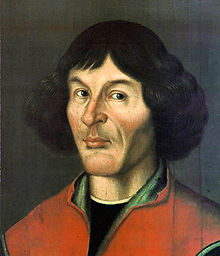 In 1543 Nicolaus Copernicus, a polish astronomer, published "On the Revolutions of the Celestial Spheres", proposing the idea that the earth revolved around the sun. For years, decades and even centuries following, this idea was fiercely debated by philosophers and scientists. In 1992 the Pope finally admitted this to be true, officially making it the Catholic Church's beleif. Certainly most people accepted this theory much earlier, but this demonstrates how new ideas take time to become accepted into the mainstream.
Personally, I like to test new theories as they arise and therefore my thinking may change along the way. If you had asked my 5 years ago about barefoot running I would have said it's crazy. Most chiropractors and podiatrists still advise against it.
My own running style has changed recently as a result of the trend in thinking. I switched to a less supportive "minimal" style running shoe. I do run barefoot on occasion, but only as a traning tool. I have, however, changed from a heel-striker to a midfoot/forefoot striker depending on the speed I run.
I also recently attended as chiropractic seminar on physical therapy that proposed less importance of human biomechanical structure, and more importance of biomechanical function.
These two new ideas initially made no connection, but as I run and move differently, it becomes apparent that there is a direct relationship.
What your feet are doing now, i.e. pronating or supinating or inverting or everting, is not as important as which muscles activate properly and are effective at stabilizing the foot, and hence the whole human frame. Not to disregard structure entirely, but to use it as a guide to detecting a functional problem.
A review of the literature indicates that 20-30% of the population is born flat-footed. Should this be considered "defective"? Many of these people have gone on to become professional athletes.
It all boils down to one thing: reconnecting with your body. Regardless of your structure, your body can and will adapt to find a way to do what your body is telling it to do.
To be continued.
In 1543 Nicolaus Copernicus, a polish astronomer, published "On the Revolutions of the Celestial Spheres", proposing the idea that the earth revolved around the sun. For years, decades and even centuries following, this idea was fiercely debated by philosophers and scientists. In 1992 the Pope finally admitted this to be true, officially making it the Catholic Church's beleif. Certainly most people accepted this theory much earlier, but this demonstrates how new ideas take time to become accepted into the mainstream.
Personally, I like to test new theories as they arise and therefore my thinking may change along the way. If you had asked my 5 years ago about barefoot running I would have said it's crazy. Most chiropractors and podiatrists still advise against it.
My own running style has changed recently as a result of the trend in thinking. I switched to a less supportive "minimal" style running shoe. I do run barefoot on occasion, but only as a traning tool. I have, however, changed from a heel-striker to a midfoot/forefoot striker depending on the speed I run.
I also recently attended as chiropractic seminar on physical therapy that proposed less importance of human biomechanical structure, and more importance of biomechanical function.
These two new ideas initially made no connection, but as I run and move differently, it becomes apparent that there is a direct relationship.
What your feet are doing now, i.e. pronating or supinating or inverting or everting, is not as important as which muscles activate properly and are effective at stabilizing the foot, and hence the whole human frame. Not to disregard structure entirely, but to use it as a guide to detecting a functional problem.
A review of the literature indicates that 20-30% of the population is born flat-footed. Should this be considered "defective"? Many of these people have gone on to become professional athletes.
It all boils down to one thing: reconnecting with your body. Regardless of your structure, your body can and will adapt to find a way to do what your body is telling it to do.
To be continued.
Subscribe to:
Posts (Atom)