Wednesday, April 24, 2019

DON'T Make This Mistake During Core Exercises (Know Your ABC's)

As a personal trainer in the early 1990's, it was pretty standard operating procedure to give people sit-ups or ab crunches as part of their routine. I don't use these exercises much anymore, but honestly if done right they do have some benefit. I would always emphasize the breathing as I showed them the exercise. Nonetheless, EVERY SINGLE PERSON would hold their breath at some point. Then I would remind them. "OK Mr. Smith. Your form looks good, but just don't forget to breathe." Of course they would start breathing again. And of course, about 3 or 4 repetitions later, they would start to hold their breath again. EVERY SINGLE PERSON!

Fast forward to today. I am still giving people "core" exercises. By my standards "the core" means any part of the torso that connects one limb to another, or a limb to the head. That covers a lot of ground. Needless to say it's not just the "abs" anymore. Nowadays I give patients exercises which they are going to do at home without me. I can't be there to say "Breathe!". So how can I ensure that they are breathing? They need to know their ABC's


Active Breathing Core (ABC) is system of exercises that I developed in which the person holds a position, and counts breaths. They do not count repetitions. But they have to be big audible breaths. Not so big that they are hyperventilating, but big enough to challenge the respirator muscles beyond the "rest phase". It's really not as complicated as it sounds. It is similar to yoga, but you just have to count your breaths.

At rest, our breath is controlled at a subsconcious level. It involves the diaphragm, the elastic recoil of the lungs, and some parts of the intercostal muscles (the muscles between the ribs). This process happens even though we are not consciously aware of it. Therefore I call it a passive breath pattern.

Active breathing occurs when our heart rate goes up and our demand for oxygen increases. Most anything beyond sitting and resting can do this. Light activities like walking, washing dishes, or cutting the grass are good examples. Our bodies need to increase the volume of air that is taken in, and begin to use different muscles to do just that. This includes muscles of the neck and shoulders (SCM, scalenes, pec minor) for the inhale, and abdominal and low back muscles for the exhale. These "active" exhaling muscles are rectus abdominis, external oblique, internal oblique and transversus abdominis, iliocostalis and longissimus, the serratus posterior inferior and quadratus lumborum. All of those muscles are "core". Those muscles, which are activated in elevated breath patterns, are also necessary to help stabilize and support the torso during the activity. Therefore, these muscles need to be taught to be able to COORDINATE their function of breathing with their function of stabilizing!

Try this test. Stand up. Then squat down as if you are about to pick up a pencil. Then stand back up. Go ahead and do it now.
Done? Chances are you just held your breath to complete this movement. Your body should not need to shut down the breathing process in order to do such simple tasks. Now think about running. Do you think you need some core muscles during this movement? Do you think you also need to breath? Bingo!

So for simplification, I now give these positional exercises and have the person count three big audible breaths. Then come out of the position and relax for a breath or two. This is repeated at least 5 times. Coming out of position is often necessary. The longer someone holds a position, the less likely they are to hold GOOD position. So the small break helps them "reset".

Don't worry, though. You won't have to go back to school to learn your ABC's. You can see them here on Youtube.


Monday, April 22, 2019

How to tell if your headache is really from sinus pressure


Many of my patients already know that they have allergies. For some it is new territory. The idea that allergies can increase or decrease through the course of one's life is still surprising to many. ("I've never had allergies before!") In addition, many people with allergies don't really know what they are allergic to. This makes them all more difficult to diagnose. Yet allergies can definitely combine with other factors and contribute to existing headaches. It may be often enough that people may become confused about where there usual headache ends and the sinus headache begins. Then add to the mix possible sinus infections? Even more confusing.! So here are a few distinguishing characteristics.

Most people will describe their headache as "pressure" when it is sinus related. Otherwise headaches are usually felt as dull aches or bands of tension. If the pain is around the eyes and cheeks and central forehead, it is likely sinus related. Pain or pressure in the teeth is also sinus related. When it is more around the temples, or a band around the head, it's a tension headache. Near or above one eye is usually a migraine. If this does not help, try this quick test. Bend forward or tilt your head forward. A sinus related pain will usually create more pressure and more pain. Most other headache variations do not worsen when you move this way. Lastly, migraines are the only headache to also cause nausea and/or vomiting. If you experience this, then it is usually a migraine.


Attributing the allergy to the allergen is helpful in figuring out the patterns. Seasonal allergies often play a large role. Depending on what season it is can help you determine what you are reacting to. Late winter/early spring is usually from snow mould. (This is actually a fungus). Mid to late spring is more often tree pollen. Late spring to mid summer is usually grass pollen. Mid to late summer is usually weed pollen. Late summer to fall is most often leaf mold. Some sources say winter is high in mold as well. This may be true, but keep in mind indoor allergies such as dust mites. Most people don't spend much time outdoors through the coldest months. In fact, using an air purifier in your bedroom can help cut down on all allergens, especially the indoor ones. You can also use weather apps or allergy specific apps to help track the allergens according to your specific climate.

To make things even more confusing, chronic allergies can weaken your immune system to make you more susceptible to getting a sinus infection. There are some general guidelines that can help regardless. Current research suggests that people suffering from chronic sinusitis often have poor gut flora. This is where the immune system starts. Probiotic supplementation therefore can go a long way to help one's immune system under these circumstances. Herbal remedies can also be helpful. I have seen the best success in allergies with feverfew, stinging nettles, and Vitamin C. Chronic infection seems to be better treated with oregano oil. Of course, if you have a fever or other symptoms in addition to sinus pressure headache, please consult your primary care physician.


Thursday, April 18, 2019

Chronic knee pain: is it really arthritis?


There are few injuries that will slow you down as much as knee pain. In circumstances where there is trauma and /or accident, the diagnosis and treatment are fairly obvious. Think of someone being tackled from the side and their knee buckles in. This is likely a tear of one or more ligaments of the knee. Treatment depends upon the degree of damage, and surgical reconstruction may not be a bad idea. But more often the pain is more mysterious. It arises with no obvious cause. It comes and goes at seemingly random times. Many people conclude it must be arthritis.

If you follow this blog or my Facebook page you likely have likely read about how there is POOR CORRELATION of pain to joint damage and arthritis. Scientists have always assumed that x-rays, CT scans and MRI imaging were the "gold standard" for diagnosing musculoskeletal pain. What they are looking for is evidence of joint damage and/or arthritis. But recent studies have shown that MRIs of "normal" or "healthy" populations WITHOUT pain also show significant levels of damage and arthritis. So the question is- how can you be certain that it is the cause of YOUR pain, when there are so many other people with the same damage and NO PAIN?
So here is some perspective. The old way of thinking goes something like this:


In the old way of thinking, ALL damage was due to overuse and overactivity. The problem with this is that everything is considered "too much". Is it really "too much" when someone squats down to pick up a small child? What about going up or down stairs? Should an otherwise healthy 25 year old woman need to stop running 5k races because it is "too much" for her knee arthritis? I think not.

The new way of thinking looks something like this. It is a double feedback loop.

You can see how even if you surgically "fix" damage and arthritis, the pain is likely to continue. It's not that damage and arthritis are always completely unrelated to pain, it's just that it's not a direct one to one relationship as previously thought.

Too often in the past, we have been told to be "careful", and "don't overdo it". Unfortunately this has led to many of us being overly cautious and fearful of daily activities. We start to see our bodies and weak, and need to avoid pain at all costs. Opioid prescriptions are a good example. They don't heal you. Your body does the healing. We just need to optimize the heeling environment. How do we do this? MOTION! Gradually increasing the activity level is crucial. Muscular resistance exercise is necessary. Studies have shown that even in the presence of arthritis, training the surrounding muscle structures helps to improve function and decrease pain. So the first question is- does such training decrease the level of arthritis? No. Arthritis can't be undone. Then there is the second question. Is the pain really from arthritis?

Wednesday, March 20, 2019

MIGRAINE!

The term "migraine" is often tossed around in a sense to convey a particularly severe headache. But not all severe headaches are migraines. One can also certainly have a "mild migraine". So what's the difference?


Usually the diagnosis is made from the associated symptoms and location of pain. The location of "head" pain is usually just above one eye. But the pain pattern can also reside around the temples or forehead, which would resemble a tension or sinus headache. Most migraine sufferers will also have pain in the neck. In fact, it's the single most commonly reported symptom for those who have been diagnosed with a "migraine". (Source: https://onlinelibrary.wiley.com/doi/abs/10.1111/j.1526-4610.2009.01608.x )

Nausea, dizziness, and light sensitivity are the next three on the "most common symptom" list. Sometimes the person gets a visual disturbance prior to the headache, called an "aura".  Or sometimes they just become very sensitive to light, and will tend to sit in a dark room by themselves.  Vomiting due to nausea is not uncommon.  This odd list of symptoms becomes less confusing when you start to look at one anatomical area...the BRAINSTEM.


The brainstem is divided into three major parts: the midbrain, the pons, and medulla oblongata. The last one, the "medulla", is the portion that sits lowest in the skull. Wikipedia states:
"The medulla oblongata (often just referred to as the medulla) is the lower half of the brainstem continuous with the spinal cord. Its upper part is continuous with the pons. [2] The medulla contains the cardiac, dorsal and ventral respiratory groups, and vasomotor centres, dealing with heart rate, breathing and blood pressure. Another important medullary structure is the area postrema whose functions include the control of vomiting." This is noteworthy since one of the most common symptoms of a migraine is nausea.

Why then would it then affect dizziness? Cranial Nerve VIII nucleus originates in the medulla as well the pons (source: Terminologia Anatomica). This nerve is partly responsible for balance and hearing.

How then could it affect vision? One theory as to why people will sometimes get visual disturbances (aura) is that it is from a lack of blood flow to the retina. Whereas the medulla is the control center for blood pressure, it could potentially lower the blood pressure enough to cause such symptoms. 

What about light sensitivity? This symptom may be related to the medulla's regulation of the sleep/wake cycle.   It is very common for migraine sufferers to go lay down in a dark room.  They typically do not fall asleep, yet they won't be watching TV or reading a book either.  To me, this sounds like the body is in an "in between state". It is as if it is not quite fully awake, and not quite fully asleep. Imagine if you are falling asleep, and someone shines a flashlight at you, you would certainly be "light sensitive".

From a chiropractor's viewpoint, it is also helpful to note how the medulla projects into the spinal canal of the top 2 vertebrae, C1 and C2. Therefore, any misalignments in these vertebrae can compromise or affect pressure on the medulla, and result in symptoms associated with a migraine! Things that can cause misalignments include poor posture, weak core muscles, and improper sitting and sleeping positions. Admittedly some of these mechanisms are not yet fully understood.  But considering that the medical system has yet to provide it's own explanation, I will stick with mine. 


Brainstem graphics provided by:
Version 8.25 from the Textbook
OpenStax Anatomy and Physiology
Published May 18, 2016
https://cnx.org/contents/FPtK1zmh@8.25:fEI3C8Ot@10/Preface
https://creativecommons.org/licenses/by/4.0/deed.en


Tuesday, February 26, 2019

Rotator Cuff Injury Without Accident or Trauma

It certainly seems a bit strange, how so many people get rotator cuff injuries with no real trauma or accident. Its not like they are challenging their shoulders by throwing fastballs or javelins. Most people do remember "tweaking" their shoulder during something like painting, or perhaps some other overhead work. Often times the pain can appear for no apparent reason at all. Doing an internet search on rotator cuff injury will often get you nowhere. "Tear" or "degeneration" is what you are told. So without any real trauma one is left to believe the degeneration theory, aka "wear and tear". But you CAN'T UNDO degeneration! So what CAN you do? Prepare for surgery? Not so fast.

Once again I will try to limit the use of medical jargon, as I feel it often used to confuse the patient instead of communicate the real problem. The rotator "cuff" is the band of four muscles around the top of the arm bone, which is the humerus. All 4 rotator cuff muscles are there to keep the arm from sliding out of the "socket". Three of the four muscles are also for moving the arm by turning it outwards, away from your belly button (external rotation). The remaining one muscle helps turn the humerus inwards, towards the belly button (internal rotation). This one muscle works in conjunction with some quite large muscles by comparison, the pectoralis major and the latissmus dorsi.


When we are in the upright position, we mostly use our deltoid and trapezius muscles to do the heavy lifting. These muscles are also a bit bigger than the rotator cuff set.


The problem occurs if we are not fully upright. Then the movement starts to resemble external rotation (arm twisting away from belly button). Even a slight bend forward can make your body shift to using the smaller, weaker rotator cuff muscles to a greater degree instead of the larger and bigger deltoid and trapezius. Gravity does not change just because out body position does.


The slight bend forward in the above picture is NOT UNLIKE a slouch. You may be thinking that perhaps this exercise is not a good idea. I would generally agree. If you have worked your rotator cuff muscles to the point of chronic pain, and occasional strain, I don't see the sense in working those muscles further. Yet this and other external rotation exercises is what most doctors and therapists would give you (including many chiropractors). It can sometimes help short term, but it is a poor choice for a long term solution.

What DOES make sense is correcting posture so this strain on the rotator cuff muscles LESSENS. But posture is more than "standing up straight". Because we cannot see ourselves, it very difficult for us to monitor our own body positions. Most people have a poor body awareness to begin with. A good postural analysis is therefor essential. This includes the whole body, not just the area of pain. What I mean is that if your knees are so stiff or damaged to the point that they don't fully straighten, this could be creating a forward bent posture. If you are doing this, you are likely straining your rotator cuff muscles. This is only one example, but there are many possible postural alterations that can contribute to rotator cuff stress. Any surgical solution is temporary at best unless you correct what has created the stress to begin with. And for the record, surgical repair is not as successful as you might think. A 2010 study in the Annals of Internal Medicine concuded:
"Evidence on the comparative effectiveness and harms of various operative and nonoperative treatments for rotator cuff tears is limited and inconclusive."

Of course most people with postural faults don't realize they are doing it. This is why an integrated approach is often the best solution. If you have not had a head to toe evaluation in regards to your chronic rotator cuff pain, give us a call. We can also work on that knee problem.

Thursday, February 14, 2019

"Do I Have Sciatica?"

This question is heard at least once per day here at Schafer Chiropractic. Which tells me it is a good topic for a blog. I will try to limit the use of fancy medical terminology. I often find that big words are used by people who don't fully understand the subject anyway. Sciatica is merely an irritation of the sciatic nerve that creates pain down the path of the sciatic nerve. This nerve runs down the back side of your leg. Not the front side of the leg. Not the outside of the leg. The BACK of the leg. Sometimes the pain goes to the back of the knee. Sometimes it goes to the back of the calf and the foot. See picture below.


The L4, L5 and sacral nerve roots are often compromised before they combine to make the very large sciatic nerve. Then the nerve exits the gluteal region from underneath the piriformis muscle. You may have heard of something called piriformis syndrome. This would be a swelling of the piriformis muscle to the point where it compresses the sciatic nerve. This is an unlikely cause. I say that because I have encountered very few cases in my 20 years of experience. In a very small percentage of people, the sciatic nerve actually runs THROUGH the piriformis muscle. In this small percentage of patients, it is much more likely to irritate the nerve.

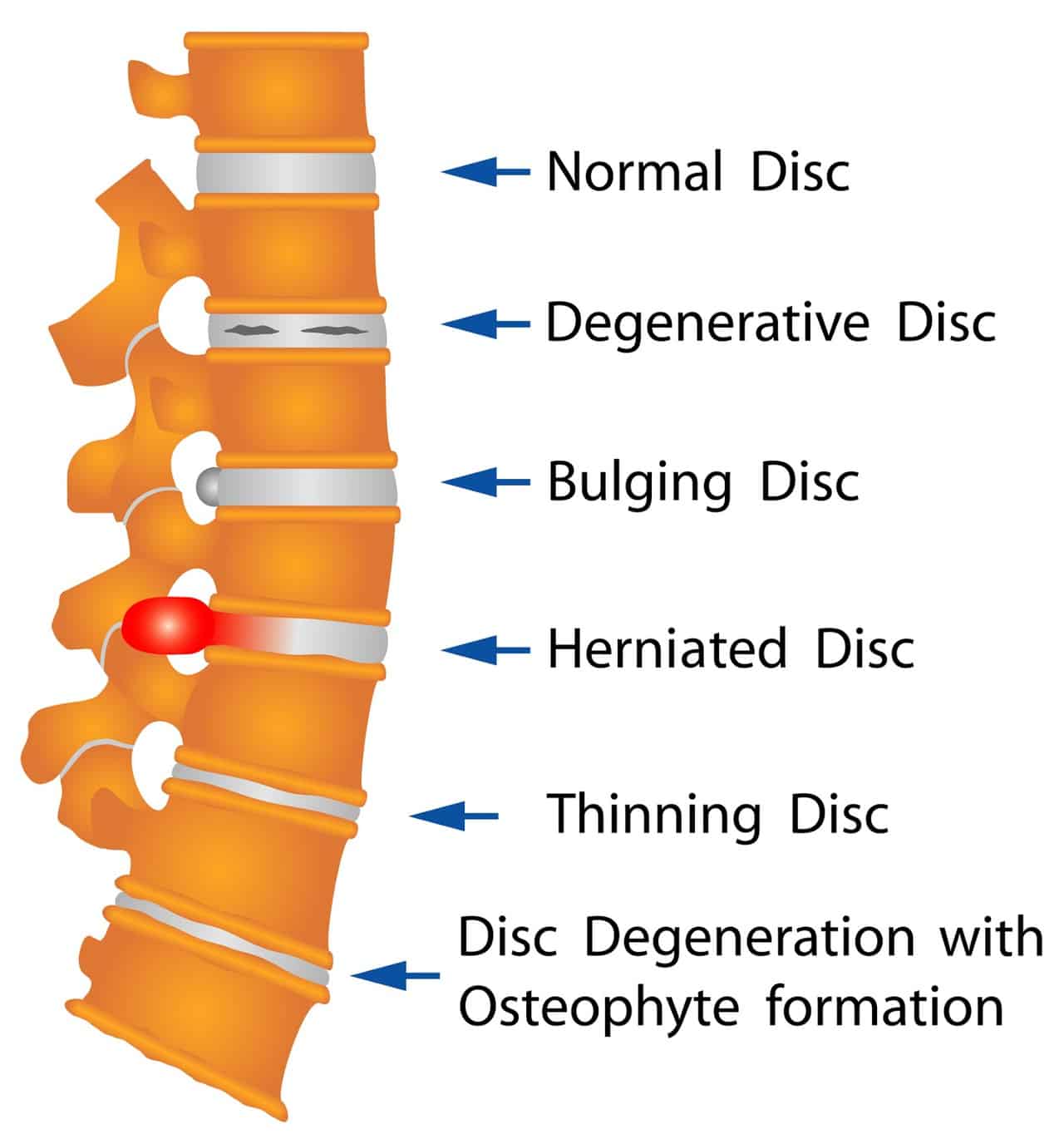
Sciatica may be associated with pain in the low back. Usually this pain is unilateral (one-sided). Pain going down the back of both legs is usually due to other problems. Nerve pain can feel like a general ache, sharp jolt, burning, or tingling. How far the pain goes down the leg also can vary. More severe cases involve pain going into the foot. It is my humble opinion that most cases of real sciatica are due to a swelling or bulging of an intervertebral disc. This irritation occurs well before the piriformis muscle. Damage to the discs may be from direct trauma (fall onto your butt), or from poor posture and improper lifting techniques. Excessive sitting usually plays a significant role as well. This swelling or bulging can sometimes put pressure on, compress, tug, or pinch one of the nerves where it exits the spine. In this type of sciatica, the pain will usually be worse if you sit for too long, and when you first awake in the morning. If this sounds like you, we can help. DO NOT ASSUME that you need to be prepped for surgery.


Another possible cause for sciatica is spinal stenosis. "Stenosis" means closing. So spinal stenosis is a closing of the spinal canal. The canal is where the entire spinal cord runs through. This is often due to advanced arthritis, so if you are young, this is a very unlikely cause.

As stated above, sciatica is pain down the back of the leg. I have encountered many patients with pain down the SIDE of their leg, which they call "sciatica". Obviously this cannot be, as per the very definition of the word. Yet some of these people have been diagnosed by other medical doctors, chiropractors, and/or physical therapists. It is sloppy diagnosing. This pain often starts in the low back like sciatica, but quickly passes to the outside of the hips and stays lateral down the leg. This scenario is VERY COMMON.


This is called iliotibial band syndrome, or IT band for short. The low back muscles combine with the gluteal muscles and feeds into the iliotibial band (IT band). This band runs down the outside of the leg and connects to the outside of the knee. I often find that the patient has had knee problems of the painful side for many years prior to the "pseudo sciatica". The outside muscle of the lower leg can also be affected. These are called the peroneal muscles. It is well understood that muscles work together in systems. This is one of those systems. No muscle works in isolation. It is therefore unwise to point to one muscle and say "There's your problem!". In IT band syndrome, the IT band is not the real problem. The problem is usually weak gluteal muscles, combined with an unlevel pelvis. The pelvis may be unlevel due to poor posture, previous foot, ankle or knee injuries, or awkward sleeping positions. Successful treatment of the condition must include careful examination of all of these possibilities. If this sounds like you, we can help.

In all of the above scenarios, the condition is complex. The causes are many. A thorough history and exam are needed to properly diagnose the problem. MRI's can be helpful, but should not be the first course of action. Most insurance companies won't even cover them unless you have tried some sort of therapy first. As much as I would like to, I can't say that one adjustment, one stretch, or one massage will resolve the pain. Pain is a signal from your body. It is a cry for help. Most people just don't speak the language. We do.

Monday, February 4, 2019

Just try it: cross country skiing

It is my mission in life is to encourage everybody to exercise. This is because I know people will hurt less when they move more. Yet I hear all kinds of excuses. They say it is too costly, too high impact, too inconvenient, etc. Regardless, I believe there is an exercise out there for everybody. That's where this new blog series comes in. I will be attempting as many different exercises as possible. Taking you from trendy to old-school, from beginners to advanced, and from the common to the unconventional. I will try them all, and report back to you. I hope you enjoy.

Cross Country Skiing

If you are looking for something to keep you outside in the winter yet less dangerous than downhill skiing, try cross country skiing. The health benefits are truly impressive. And it's low-impact!

“New Records in Aerobic Power Among Octogenarian Lifelong Endurance Athletes,” a Ball State research project conducted in collaboration with several Swedish researchers, found that the long-time athletes in the study are enjoying vibrant and healthy lives. The study was published in the Journal of Applied Physiology. “In this case, 80 is the new 40,” said the study’s lead author Scott Trappe, director of Ball State’s Human Performance Laboratory. “These athletes are not who we think of when we consider 80-year-olds because they are in fantastic shape. They are simply incredible, happy people who enjoy life and are living it to the fullest. They are still actively engaged in competitive events.”

“To our knowledge, the VO2 max of the lifelong endurance athletes was the highest recorded in humans in this age group, and comparable to nonendurance-trained men 40 years younger,” Trappe said. “We also analyzed the aerobic capacity of their muscles by examining biopsies taken from thigh muscles, and found it was about double that of typical men. In fact, the oldest gentleman was 91 years old, but his aerobic capacity resembles that of a man 50 years younger. It was absolutely astounding.”


The benefits are no doubt related to the usage of the arms for propulsion via the ski poles. This differs from running and bicycling, which are primarily leg driven. Swimming has great benefits to, but cross country skiing is also a "weight bearing exercise" so it helps retain bone mass as we age. Swimming does not. Classic cross country skiing (see pic to the left) would also be a smart addition to any tri-athletes workout, as it reinforces the cross-crawl mechanism. This mechanism connects the upper body muscles on one side of the body, with the lower body muscles of the opposite side. Stimulating these connections can help prevent injuries, and improve performance in running and swimming, which also rely heavily on this pattern of muscle synchronization. The "skating" technique (not pictured) uses both arms simultaneously, and thus gives an even more impressive cardiovascular challenge. This requires a much wider and flatter snow surface, which may be harder to find.


On the right, you can see a photo of my first time out. Some coordination is required, but falling to the snow on a flat trail is certainly less painful than wiping out on the slopes. On my first time out, I fell twice, with only my pride being injured. The cost of equipment is minimal, and there are plenty of free trails around west Michigan. Some urban parks also show evidence of other cross country skiing enthusiasts. I skied Manhattan Park here is East Grand Rapids, because it is close to my house, and because I saw some trails when I took my daughter sledding there. Equipment includes skis, boots, and poles. A new set starts at about $250. If you want to try it first , rental may be the way to go. Second hand stores like Play It Again Sports will often have older models for purchase under $100. (I bought a set from a guy on Facebook Marketplace for $65.) Good or bad, this sport is weather dependent. t's a strictly limited-time option. Considering how much snow we get here in the Grand Rapids area, there is usually ample opportunity, so ski while you can.