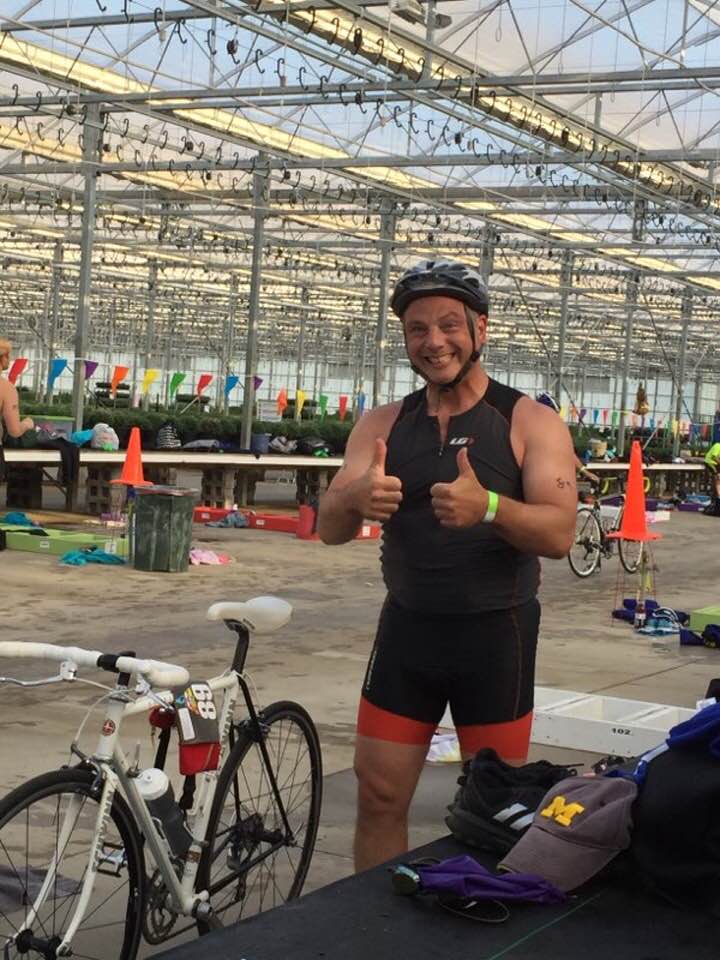
It is my mission in life is to encourage everybody to exercise. This is because I know people will hurt less when they move more. Yet I hear all kinds of excuses. They say it is too costly, too high impact, too inconvenient, etc. Regardless, I believe there is an exercise out there for everybody. That's where this new blog series comes in. I will be attempting as many different exercises as possible. Taking you from trendy to old-school, from beginners to advanced, and from the common to the unconventional. I will try them all, and report back to you. I hope you enjoy.
Cross Country Skiing
If you are looking for something to keep you outside in the winter yet less dangerous than downhill skiing, try cross country skiing. The health benefits are truly impressive. And it's low-impact!
“New Records in Aerobic Power Among Octogenarian Lifelong Endurance Athletes,” a Ball State research project conducted in collaboration with several Swedish researchers, found that the long-time athletes in the study are enjoying vibrant and healthy lives. The study was published in the Journal of Applied Physiology. “In this case, 80 is the new 40,” said the study’s lead author Scott Trappe, director of Ball State’s Human Performance Laboratory. “These athletes are not who we think of when we consider 80-year-olds because they are in fantastic shape. They are simply incredible, happy people who enjoy life and are living it to the fullest. They are still actively engaged in competitive events.”
“To our knowledge, the VO2 max of the lifelong endurance athletes was the highest recorded in humans in this age group, and comparable to nonendurance-trained men 40 years younger,” Trappe said. “We also analyzed the aerobic capacity of their muscles by examining biopsies taken from thigh muscles, and found it was about double that of typical men. In fact, the oldest gentleman was 91 years old, but his aerobic capacity resembles that of a man 50 years younger. It was absolutely astounding.”
The benefits are no doubt related to the usage of the arms for propulsion via the ski poles. This differs from running and bicycling, which are primarily leg driven. Swimming has great benefits to, but cross country skiing is also a "weight bearing exercise" so it helps retain bone mass as we age. Swimming does not. Classic cross country skiing (see pic to the left) would also be a smart addition to any tri-athletes workout, as it reinforces the cross-crawl mechanism. This mechanism connects the upper body muscles on one side of the body, with the lower body muscles of the opposite side. Stimulating these connections can help prevent injuries, and improve performance in running and swimming, which also rely heavily on this pattern of muscle synchronization. The "skating" technique (not pictured) uses both arms simultaneously, and thus gives an even more impressive cardiovascular challenge. This requires a much wider and flatter snow surface, which may be harder to find.
On the right, you can see a photo of my first time out. Some coordination is required, but falling to the snow on a flat trail is certainly less painful than wiping out on the slopes. On my first time out, I fell twice, with only my pride being injured. The cost of equipment is minimal, and there are plenty of free trails around west Michigan. Some urban parks also show evidence of other cross country skiing enthusiasts. I skied Manhattan Park here is East Grand Rapids, because it is close to my house, and because I saw some trails when I took my daughter sledding there. Equipment includes skis, boots, and poles. A new set starts at about $250. If you want to try it first , rental may be the way to go. Second hand stores like Play It Again Sports will often have older models for purchase under $100. (I bought a set from a guy on Facebook Marketplace for $65.) Good or bad, this sport is weather dependent. t's a strictly limited-time option. Considering how much snow we get here in the Grand Rapids area, there is usually ample opportunity, so ski while you can.
Monday, February 4, 2019
Monday, January 14, 2019
Top 5 Signs that You Should See a Chiropractor
Our bodies may try to communicate with us by sending us signals, but we don't always speak the same language. Here are my top 5 signs that our bodies are trying to say "go see your chiropractor".
1. Your body used to hurt and be sore for very specific reasons. Now it seems to hurt for absolutely no reason. People rarely see me for pain and soreness from a home project or overdoing it at the gym. This is because they can connect cause and effect. When the pain is more random, or without any significant change in activity level, it is a cry for help.
2. You are pretty certain that your hip pain and foot pain are related, but your MD says that it's just from arthritis. The same could happen with neck and arm pain. The body is likely trying to tell you that there is an underlying biomechanical dysfunction related to both of them. In truth, many people have arthritis without any pain, so why are you different? Looking beyond the point of pain is necessary to find the point of dysfunction.
3. Sitting for long periods gives you low back pain. "Sitting is the new smoking" is a popular phrase nowadays. However, it is unlikely that our cultural norms will be changing anytime soon. Many of us will still be expected to sit at a computer for our jobs, sit and drive, sit and eat, etc. So, let's train for it. Why not train yourself, much like athletes do, to better prepare you for the physical demands of daily life? Core exercises are a must for anyone who sits for their occupation. They will get you into a better posture, and prevent further pain.
4. Your neck pain has now become headaches or migraines. Chronic misalignments of the top 2 vertebrae are often the cause of headaches, including migraines. In such cases, posture is usually to blame, and core exercises are again necessary.
5. You've tried everything else. This is where a good history and assessment of biomechanics (how you move) is essential. To treat pain without properly assessing why it is hurting ultimately fails. Too many doctors want to only examine the point of pain. But as I have said previously, the point of dysfunction may be different from the point of pain. Sitting, sleeping, and workstation postures need to be investigated for habits that contribute to your pain.
1. Your body used to hurt and be sore for very specific reasons. Now it seems to hurt for absolutely no reason. People rarely see me for pain and soreness from a home project or overdoing it at the gym. This is because they can connect cause and effect. When the pain is more random, or without any significant change in activity level, it is a cry for help.
2. You are pretty certain that your hip pain and foot pain are related, but your MD says that it's just from arthritis. The same could happen with neck and arm pain. The body is likely trying to tell you that there is an underlying biomechanical dysfunction related to both of them. In truth, many people have arthritis without any pain, so why are you different? Looking beyond the point of pain is necessary to find the point of dysfunction.
3. Sitting for long periods gives you low back pain. "Sitting is the new smoking" is a popular phrase nowadays. However, it is unlikely that our cultural norms will be changing anytime soon. Many of us will still be expected to sit at a computer for our jobs, sit and drive, sit and eat, etc. So, let's train for it. Why not train yourself, much like athletes do, to better prepare you for the physical demands of daily life? Core exercises are a must for anyone who sits for their occupation. They will get you into a better posture, and prevent further pain.
4. Your neck pain has now become headaches or migraines. Chronic misalignments of the top 2 vertebrae are often the cause of headaches, including migraines. In such cases, posture is usually to blame, and core exercises are again necessary.
5. You've tried everything else. This is where a good history and assessment of biomechanics (how you move) is essential. To treat pain without properly assessing why it is hurting ultimately fails. Too many doctors want to only examine the point of pain. But as I have said previously, the point of dysfunction may be different from the point of pain. Sitting, sleeping, and workstation postures need to be investigated for habits that contribute to your pain.
Monday, October 15, 2018
3 Things You Probably Did Not Know About Plantar Fasciitis
1.Having a heel spur does not mean you have plantar fasciitis. Link here.
In this study, 50% of patients with plantar fasciitis have heel spurs. It also shows that 20% of people with NO heel pain DO have heel spurs. What all this really means is that a heel spur may develop due to the dysfunction of the entire foot over a period of time. This is why focusing on the dysfunction is much more important than focusing on expensive imaging.
2.High-load strength training may aid in a quicker reduction in pain and improvements in function, compared to stretching. Link here.. This study shows a positive effect of both stretching and strengthening, and a progressive approach to be best overall.
3. Chiropractic adjustments can improve foot alignment and therefore help decrease symptoms of plantar fasciitis. Excessive foot and ankle pronation (loss of medial arch) is associated with plantar fasciitis. Correction of this abnormal foot posture will improve foot function, and decrease the stress forces that lead to irritation of the plantar fascia.
You may be wondering why you should see a Chiropractor for plantar fasciitis. This is because a good chiropractor can see the connection between plantar fasciitis and low back pain. We can also see the connection betwen your knee pain last month, and your current hip pain. Going to a specialist may seem like a good idea, but they tend to put on blinders to what is going on in the rest of your body. There is no muscle, joint, or nerve that works in isolation. That is why it makes no sense to isolate your focus to just one area. It is often the case that the most dysfunctional areas are NOT painful. That's why you need someone with vision, and experience.
In this study, 50% of patients with plantar fasciitis have heel spurs. It also shows that 20% of people with NO heel pain DO have heel spurs. What all this really means is that a heel spur may develop due to the dysfunction of the entire foot over a period of time. This is why focusing on the dysfunction is much more important than focusing on expensive imaging.
2.High-load strength training may aid in a quicker reduction in pain and improvements in function, compared to stretching. Link here.. This study shows a positive effect of both stretching and strengthening, and a progressive approach to be best overall.
3. Chiropractic adjustments can improve foot alignment and therefore help decrease symptoms of plantar fasciitis. Excessive foot and ankle pronation (loss of medial arch) is associated with plantar fasciitis. Correction of this abnormal foot posture will improve foot function, and decrease the stress forces that lead to irritation of the plantar fascia.
You may be wondering why you should see a Chiropractor for plantar fasciitis. This is because a good chiropractor can see the connection between plantar fasciitis and low back pain. We can also see the connection betwen your knee pain last month, and your current hip pain. Going to a specialist may seem like a good idea, but they tend to put on blinders to what is going on in the rest of your body. There is no muscle, joint, or nerve that works in isolation. That is why it makes no sense to isolate your focus to just one area. It is often the case that the most dysfunctional areas are NOT painful. That's why you need someone with vision, and experience.
Wednesday, October 3, 2018
STOP THE POP!
There is much confusion around "popping" your spine. At least once per week, a new patient will ask "Is it OK to pop my back?" It is a fair question. It requires a fair explanation.
It would be wise to start with defining what exactly "popping" means. This noise happens when a stretching of a joint creates a vacuum. The vacuum pulls out gases from the synovial fluid. The release of gas creates a pop. This is called a cavitation. This is similar to what happens when you open a wine bottle (the cork-top kind, not the cheap screw cap). Improved range of motion is often felt immediately afterward. That is unless something goes wrong. And it could.
Stretching the joint to get a pop and re-aligning the joint are two different things. I can pop my own knuckles, but that does not necessarily re-align them. A real Chiropractic adjustment requires an assessment first. It requires that misalignments be identified before the adjustment, and checked afterward to see if any change occurred. Without this essential information, the chances of the joints moving in a "good" direction are minimal. Here is another curveball- the areas that are in pain are not always the areas that need to be adjusted!
Once in awhile, I see someone who has "popped" a joint in a bad direction, and they are stuck. The alignment is now worse, and sometimes painful. However, it more often happens that the person has popped their back numerous times a day, and have done so for years or even decades. When this happens, the joint tissues get stretched. It becomes difficult if not impossible to achieve any adjustment until the person STOPS THE POP. This patient is usually very disappointed on the first visit, because any further "popping" is unlikely.
It is surprising to me how many DIY videos there are on Youtube for those willing to try, but these are quite ridiculous. I will say that some of these movements are good as stretches. But there is a big difference between going for a stretch and going for a pop. If you are truly trying to stretch, and you feel a pop, there is no need to fear. Unless, of course, it was a button that popped off your clothes.
It would be wise to start with defining what exactly "popping" means. This noise happens when a stretching of a joint creates a vacuum. The vacuum pulls out gases from the synovial fluid. The release of gas creates a pop. This is called a cavitation. This is similar to what happens when you open a wine bottle (the cork-top kind, not the cheap screw cap). Improved range of motion is often felt immediately afterward. That is unless something goes wrong. And it could.
Stretching the joint to get a pop and re-aligning the joint are two different things. I can pop my own knuckles, but that does not necessarily re-align them. A real Chiropractic adjustment requires an assessment first. It requires that misalignments be identified before the adjustment, and checked afterward to see if any change occurred. Without this essential information, the chances of the joints moving in a "good" direction are minimal. Here is another curveball- the areas that are in pain are not always the areas that need to be adjusted!
Once in awhile, I see someone who has "popped" a joint in a bad direction, and they are stuck. The alignment is now worse, and sometimes painful. However, it more often happens that the person has popped their back numerous times a day, and have done so for years or even decades. When this happens, the joint tissues get stretched. It becomes difficult if not impossible to achieve any adjustment until the person STOPS THE POP. This patient is usually very disappointed on the first visit, because any further "popping" is unlikely.
It is surprising to me how many DIY videos there are on Youtube for those willing to try, but these are quite ridiculous. I will say that some of these movements are good as stretches. But there is a big difference between going for a stretch and going for a pop. If you are truly trying to stretch, and you feel a pop, there is no need to fear. Unless, of course, it was a button that popped off your clothes.
Monday, September 24, 2018
A pain by any other name
Being a good doctor means going further than a diagnosis. I remember talking to an acquaintance of mine at a backyard party. He was describing his recent development of neck pain and associated arm and hand pain. He had gone to his primary care physician for this very reason. He was relieved to have had a diagnosis after a very thorough exam and x-ray. He was told that he had "cervical radiculopathy". He was certain that he was on the right path to recovery, since he left the MD with a prescription for opiods.
I remember not being able to hold back a chuckle. My acquaintance asked why I thought it was funny. I replied "I knew you had cervical radiculopathy the very second you described it to me." He seemed astonished. I informed him that the phrase "cervical radiculopathy" only meant that you have neck pain and associated arm and/or hand symptoms. It is a way to classify a condition, and does not specify how one develops it. Nor what to do if you have it.
But I do understand where he was coming from. Sometimes doctors tend to minimize a pain or a problem when they feel that they don't have a good solution for it. They may suggest that the pain will go away on it's own, therefore any treatment beyond medication is unnecessary. The diagnosis of "cervical radiculopathy" meant that there was definitely something wrong, and that there was a good standard operating procedure for dealing with it.
What is even more important, however, is the reason that the person has the "cervical radiculopathy". Why this patient? Why now? Why on just this arm and not the other?
This where having a good doctor is helpful. Asking questions like the person's sleeping position, computer workstation setup, and exercise history are crucial. Looking at the entire body posture is also important. Assessing range of motion and core strength are essential.
After a few weeks of only slight improvement with the opiods, this acquaintance came to my office for the same reason. I was able to determine that his computer workstation did not have a pullout tray. This means that he had to lift his arm too much to mouse with the arm with the pain. Considering he spent 10 hours per day at the computer, this was significant. He also slept on this same side with his arm underneath his head. After a month of treatment, and improvement in his workstation and sleeping position, he was 75% better. His arm pain was completely gone.
I still see this patient periodically, as his 10 hr/day computer usage is still too much for his body to handle, even with improved ergonomics.
I remember not being able to hold back a chuckle. My acquaintance asked why I thought it was funny. I replied "I knew you had cervical radiculopathy the very second you described it to me." He seemed astonished. I informed him that the phrase "cervical radiculopathy" only meant that you have neck pain and associated arm and/or hand symptoms. It is a way to classify a condition, and does not specify how one develops it. Nor what to do if you have it.
But I do understand where he was coming from. Sometimes doctors tend to minimize a pain or a problem when they feel that they don't have a good solution for it. They may suggest that the pain will go away on it's own, therefore any treatment beyond medication is unnecessary. The diagnosis of "cervical radiculopathy" meant that there was definitely something wrong, and that there was a good standard operating procedure for dealing with it.
What is even more important, however, is the reason that the person has the "cervical radiculopathy". Why this patient? Why now? Why on just this arm and not the other?
This where having a good doctor is helpful. Asking questions like the person's sleeping position, computer workstation setup, and exercise history are crucial. Looking at the entire body posture is also important. Assessing range of motion and core strength are essential.
After a few weeks of only slight improvement with the opiods, this acquaintance came to my office for the same reason. I was able to determine that his computer workstation did not have a pullout tray. This means that he had to lift his arm too much to mouse with the arm with the pain. Considering he spent 10 hours per day at the computer, this was significant. He also slept on this same side with his arm underneath his head. After a month of treatment, and improvement in his workstation and sleeping position, he was 75% better. His arm pain was completely gone.
I still see this patient periodically, as his 10 hr/day computer usage is still too much for his body to handle, even with improved ergonomics.
Monday, September 17, 2018
Just try it.
I am chronicling my experience as a newbie triathlete in an effort to motivate people to just get out there and do it. What is "it"? It is something. It is anything more than what you are doing now. It is a step in the right direction.
Ten years ago I had consistenetly hit 212 lbs and my blood pressure was climbing. I believed heart disease was just around the corner. I was weight training, but doing little to no cardiovascular exercise. I was stuck in the bodybuilding types of exercise that I always had done. I had been doing them for 20 years. So that's when I started running. And it felt good. It felt like a meditation. Like I could think more clearly. I decided to see if I could run a marathon. I trained way longer than anyone else I talked to. I trained for a year. And I did it. And I was satisfied with that.
Then I got bored again. I needed a change. I knew that I always stunk at swimming. So I challenged myself to do a triathlon. It probably sounded more absurd to me than to anyone else. In the eyes of some people, it seemed a natural progression. I was already considered "athletic" by some. But it certainly did not come natural to me. The first year I did not train long enough. I only gave myself 5 months. I did not come close to being able to do the swim. So I did not even register. The second year I trained for 10 months. But this still did not prepare me for shock that my lungs would go through. The 43 degrees air temperature was too much and I swam to a lifeboat. I decided it was not a good day to die.
This time I trained - well I don't know how long. If you count the previous attempts, you could say I trained 2 or 3 years. And I did it! I stunk at the swimmimg. NOBODY passed me on the bike! Three people passed me in the run, but I passed a dozen others easily.
But you do not have to do triathlons. You do not have to do marathons. Maybe you will one day. Never say never. You can start by walking around the block. Join a gym. They are alot cheaper than they used to be. And there are alot more options. Yoga. Pilates. Orange Theory. Fit Body Boot Camp. Spinning. Barre (ballet?). Maybe Jazzercise? Instead of just do it, I would suggest just try it. If you don't like it, try something else. What is the best exercise you ask? It's the exercise you LIKE THE MOST. Then again, maybe it's the one you hate the least.
Ten years ago I had consistenetly hit 212 lbs and my blood pressure was climbing. I believed heart disease was just around the corner. I was weight training, but doing little to no cardiovascular exercise. I was stuck in the bodybuilding types of exercise that I always had done. I had been doing them for 20 years. So that's when I started running. And it felt good. It felt like a meditation. Like I could think more clearly. I decided to see if I could run a marathon. I trained way longer than anyone else I talked to. I trained for a year. And I did it. And I was satisfied with that.
Then I got bored again. I needed a change. I knew that I always stunk at swimming. So I challenged myself to do a triathlon. It probably sounded more absurd to me than to anyone else. In the eyes of some people, it seemed a natural progression. I was already considered "athletic" by some. But it certainly did not come natural to me. The first year I did not train long enough. I only gave myself 5 months. I did not come close to being able to do the swim. So I did not even register. The second year I trained for 10 months. But this still did not prepare me for shock that my lungs would go through. The 43 degrees air temperature was too much and I swam to a lifeboat. I decided it was not a good day to die.
This time I trained - well I don't know how long. If you count the previous attempts, you could say I trained 2 or 3 years. And I did it! I stunk at the swimmimg. NOBODY passed me on the bike! Three people passed me in the run, but I passed a dozen others easily.
But you do not have to do triathlons. You do not have to do marathons. Maybe you will one day. Never say never. You can start by walking around the block. Join a gym. They are alot cheaper than they used to be. And there are alot more options. Yoga. Pilates. Orange Theory. Fit Body Boot Camp. Spinning. Barre (ballet?). Maybe Jazzercise? Instead of just do it, I would suggest just try it. If you don't like it, try something else. What is the best exercise you ask? It's the exercise you LIKE THE MOST. Then again, maybe it's the one you hate the least.
Monday, August 27, 2018
Not every hurt equals harm
If I were to go the gym and perform 300 repetitions of a 25 lb. bicep curl, my arms would hurt the next few days. Lifting my coffee cup the next day would likely be painful. Probably very painful. Yet doing so does not create further damage.
This is a good example of "not every hurt equals harm". Many chronic pain sufferers get confused with this, and I can understand why. The medical system has in the past taught us that we are fragile. The "overuse " theory makes us believe that we should not exert ourselves. The problem is that exertion is what is needed to become stronger, and thus avoid the problem next time. Einstein once said "A clever person solves a problem. A wise person avoids it".
Most assurances that rest, along with other passive treatments like medications, ice packs, or hot packs will take of the problem fail to recognize why it happened to begin with.
That is why most new patients come to our clinic. They don't understand why they hurt. New patients typically don't come to see me because they are sore from obvious strenuous activities such as home projects, yard work, or a vigorous workout. They realize some soreness is to be expected. Yet when there is no obvious trauma, accident or overuse that they can point to, it stands to reason that there is a deficiency in the person's physical ability to perform daily activities. Working through some pain is usually required.
Having someone experienced helping you through these painful exercises is essential. Ignoring pain is tricky, but there is one general rule. That is if you are exercising and it hurts, continue the exercise. If the pain goes away the more you do the exercise, then the answer is obvious. If the pain worsens it is best to stop. Unchanging pain is a judgement call. If the pain is mild and you can tolerate it, continue. Again, it is best done with an experienced professional's guidance.
Subscribe to:
Posts (Atom)